Container Camera Process
貨櫃相機製作過程
2025 // KAOHSIUNG INTERNATIONAL CONTAINER ARTS FESTIVAL [TW]
The following are the design drawings I made for the Container Camera.
The project began with a series of sketches on paper, looking at different configurations of lenses, to create a space within the container with a high degree of flexibility for ways to mix the views. The flexibility of the hand drawings allows me to quickly test a series of options, while the movement of the hand drawing draws out possibilities I couldn’t have conceived in my mind; they are only possible through my body’s interaction with the work creation.
Once the concept takes shape, I introduce computer-aided drafting to translate these ideas into precise construction drawings. Throughout this stage, the drawings continue to inform the design and enter into an ongoing dialogue with new hand sketches. The final form of the Container Camera emerges through this back-and-forth between the analog and the digital, drawing on the specific strengths of each method.
See the built project here.
以下為我為貨櫃相機所繪製的設計圖。
本計畫起始於一系列紙上草圖,透過不同鏡頭配置的嘗試,探索如何在貨櫃內創造一個具有高度彈性的空間,以便混合與交織各種視角。手繪草圖的彈性使我能快速測試多種可能性,而手部繪製的動作本身,也引出了我在純粹思考中無法預先構想的可能性——這些都是唯有透過身體與創作過程的互動才能生成的。
當概念逐漸成形後,我引入電腦輔助製圖,將這些想法轉化為精確的施工圖。在此階段,圖面持續回饋設計,並與新的手繪草圖形成一種不斷往返的對話。貨櫃相機 的最終形式,正是在類比與數位之間的反覆轉換中逐步浮現,並充分運用了這兩種方法各自的特長。
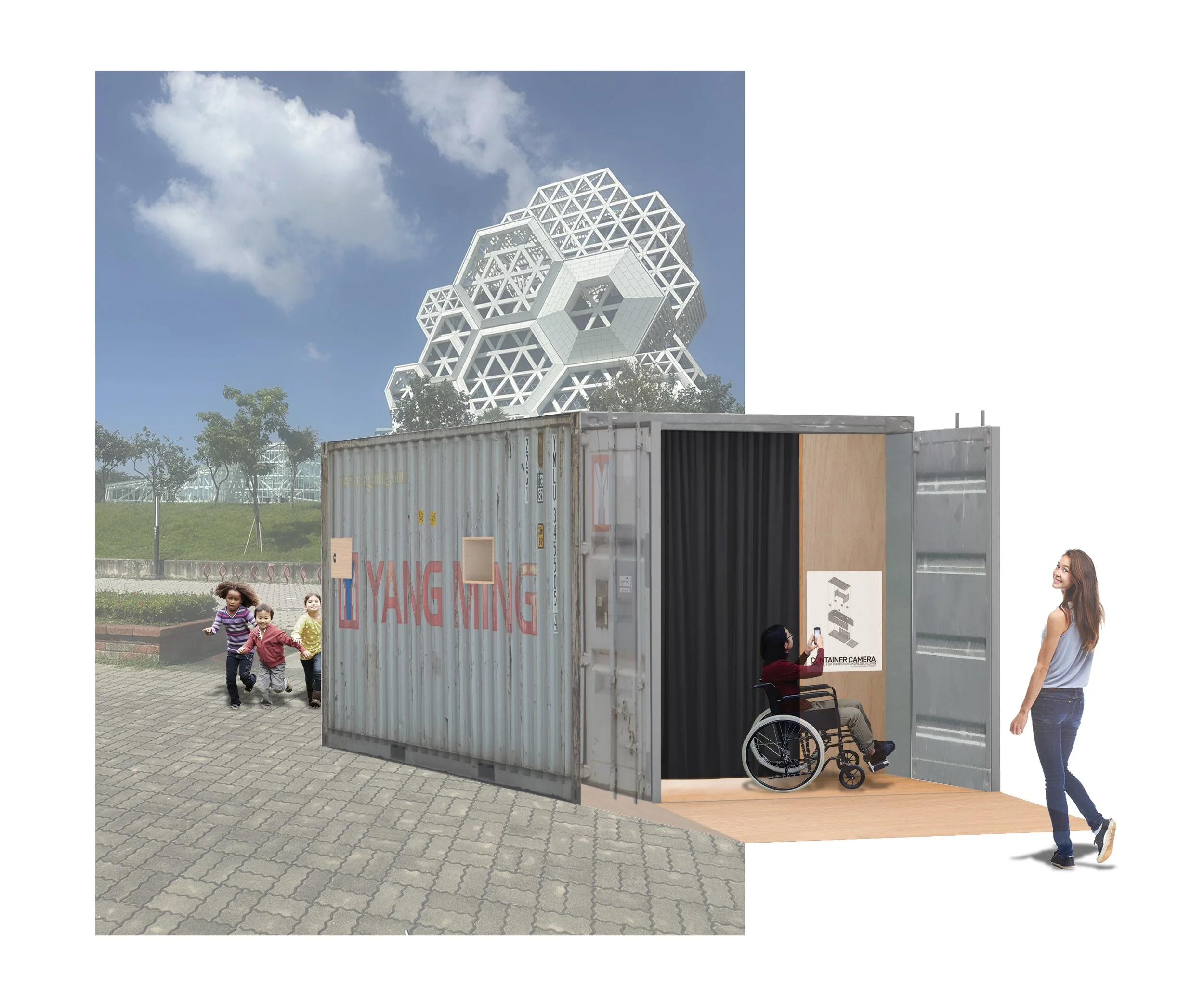
Exterior rendering collage of the Container Camera at the site, showing a person in a wheelchair up the entrance ramp, photographing the narrative mounted exteriorly explaining what the space is like. In the background Kaohsiung Music Center.
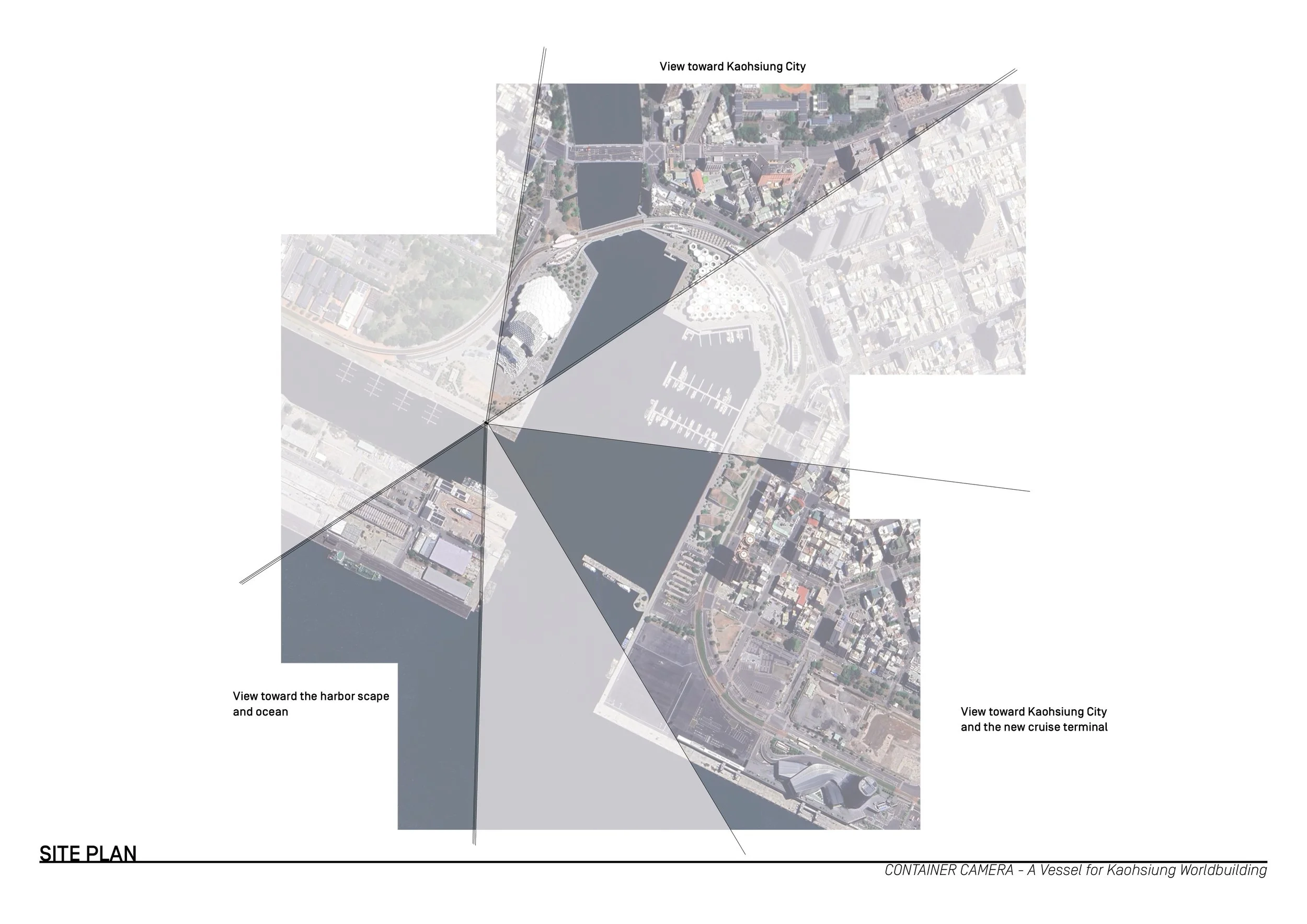
Container Camera reaches out to the city of Kaohsiung. A fragmented map of Kaohsiung’s harbor area, on top of which the container camera stands in the center. From it, three triangles extend, showing the areas that will be visible from within the container camera.
A digital drawing of the plan, around it are the six views that will be visible inside the container camera, based on the estimated location at the site. The views will be overlapped and mixed through the different lenses.
The long and cross-section of the Container Camera, showing people inside experiencing and interacting with the multiple exposed projections. Above the drawings are two images showing samples of what the multiple exposed images could look like as stills. The actual images inside the Contain Camea will first of all be moving like a film, but is also light mixing, which digital tools can not fully simulate. The image in the Container Camera will be both ephemeral and tangible. And if the audience touches the screens, they will move both in space and time.
Elevations of the four exterior sides. The exterior is anticipated to be left as found. The only change is seeing the wood parts cut through the walls holding the lenses, which will entice the audience to find out more.
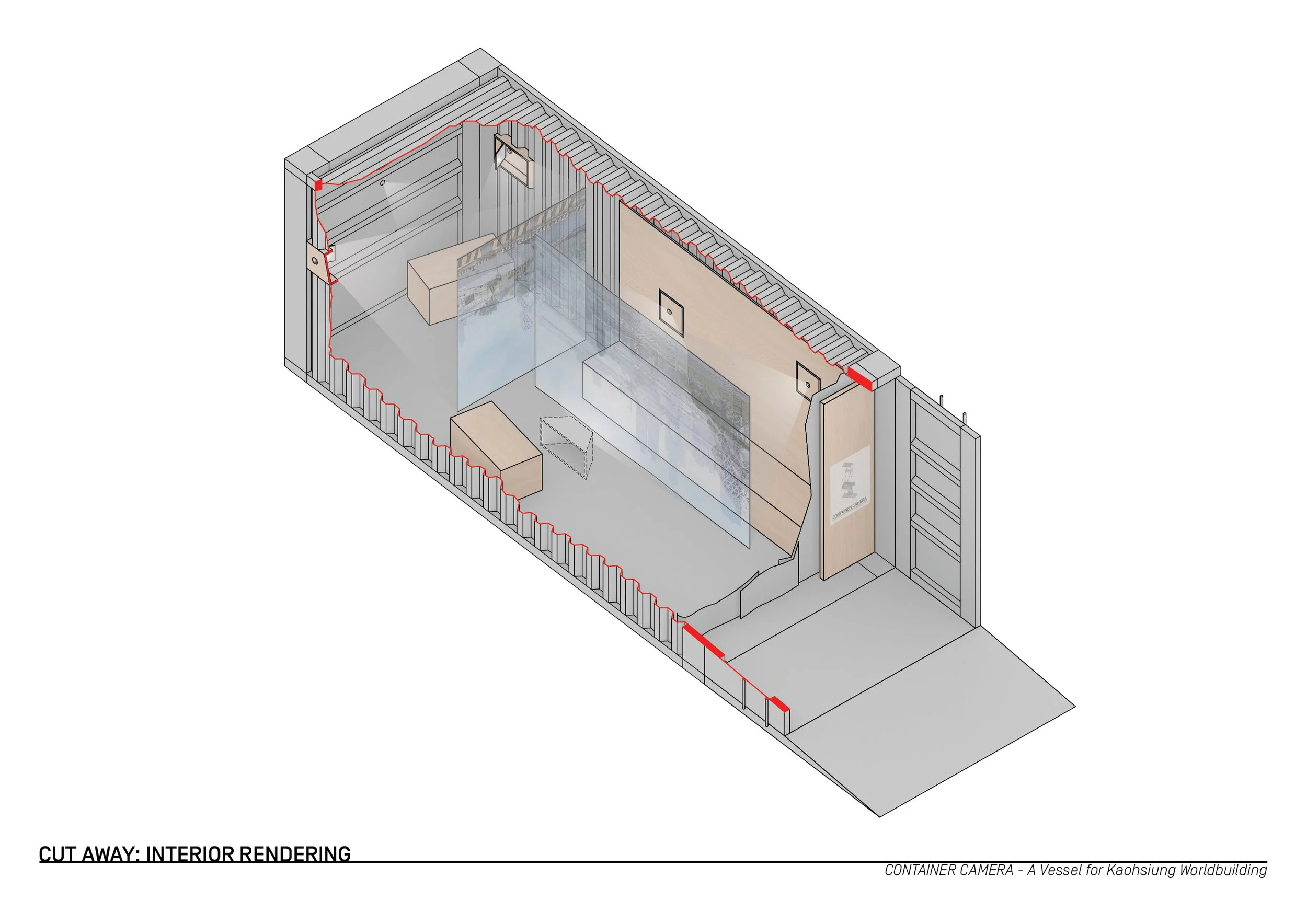
The interior is a mixture of contemporary, clean-cut wood elements and the raw container walls, allowing for both the rough and refined to coexist.
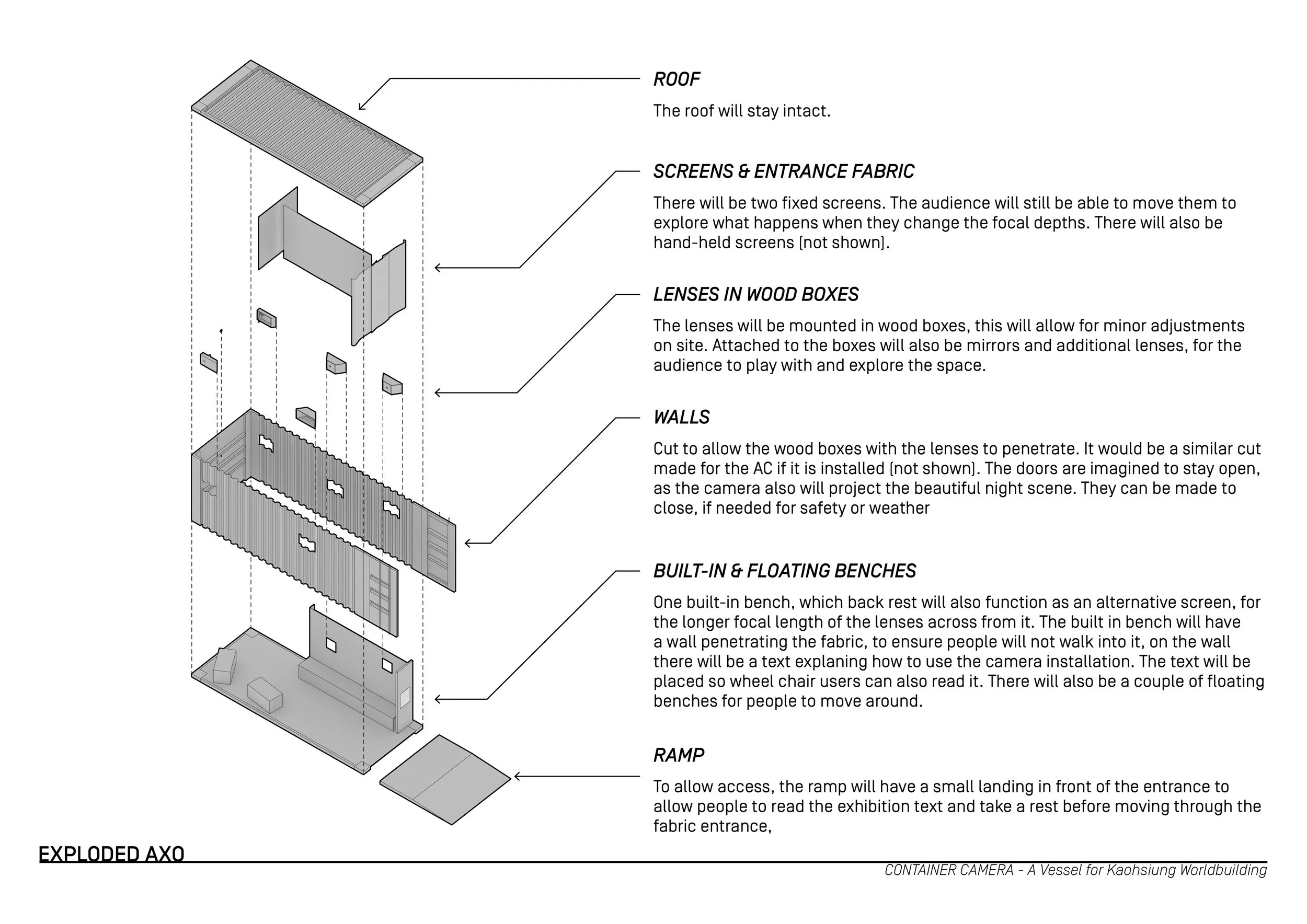
Exploded diagram of the Contain Camera showing the simple elements it contains.
Exterior rendering of the Container Camera at the site, showing a person in a wheelchair up the entrance ramp, photographing the diagram and narrative mounted on a wooden board explaining what the space is like. A woman is approaching, and three children are running up from behind the Container Camera; maybe they have just posed for different lenses to make a unique multiple combined portrait, photographed by a parent inside the Container Camera.
A diagram showing how the audience is able to change the focal length, by adding or removing a lens mounted to a hinged board, to the lens fixed on the wall.
Hand sketches of the concept for the Contain Camera across a spread in an open notebook, in black pen.